Ambulance healthcare Halland
Case study:
In this project, we collaborated with the ambulance care in Halland to lay the groundwork for a future application that integrates various channels for information distribution and support, including treatment guidelines for field nurses.
Our team developed a concept that specifically targets the distribution of information related to the fieldwork of nurses.
This project was part of a Design Studio initiative, where we work in design teams for real clients as part of our studies at the University of Halmstad.
Client
Ambulance Healthcare Halland
Time range
6 weeks
My role
UX Research - Prototype -Evaluation
Design team
6 people
Problem identification
Iterative design
Conceptualization
Takeaways
Assignment description
The project aimed to address the critical need for decision-support documents, treatment guidelines, and information support for nurses in the field. While the initial brief focused on the development of an application, our design studio project required us to create a comprehensive concept and prototype. Through extensive research and data analysis, we discovered that the organization already had an application in place for information support. Therefore, we shifted our focus to the challenge of improving the distribution of information within the organization. Our goal was to develop a fundamental study that could guide future development and innovation in this area.
Problem identification
In order to commence the project, the design team required a deeper understanding of ambulance healthcare operations and information dissemination. The problem identification phase involved the following steps...
Understanding
Research
Define
Understanding
At the outset of the project, we recognized the importance of gaining a deep understanding of the ambulance healthcare system in Sweden, with each region having its own healthcare system. As our client was the ambulance care in Halland, we concentrated on their organization. Our goal was to gain insights into the information support for nurses' fieldwork, including its components and how they integrated into the work.
Research
During the research phase, we encountered a challenge in finding relevant information about how the organization worked with information support in the fieldwork. Despite our efforts to search online, we struggled to find the information we needed, specifically regarding how the organization handled monthly information regarding stations and more urgent information regarding closed hospitals, etc. We realized we needed to explore alternative methods to gather the necessary knowledge.
We ended up doing:
Interviews with management
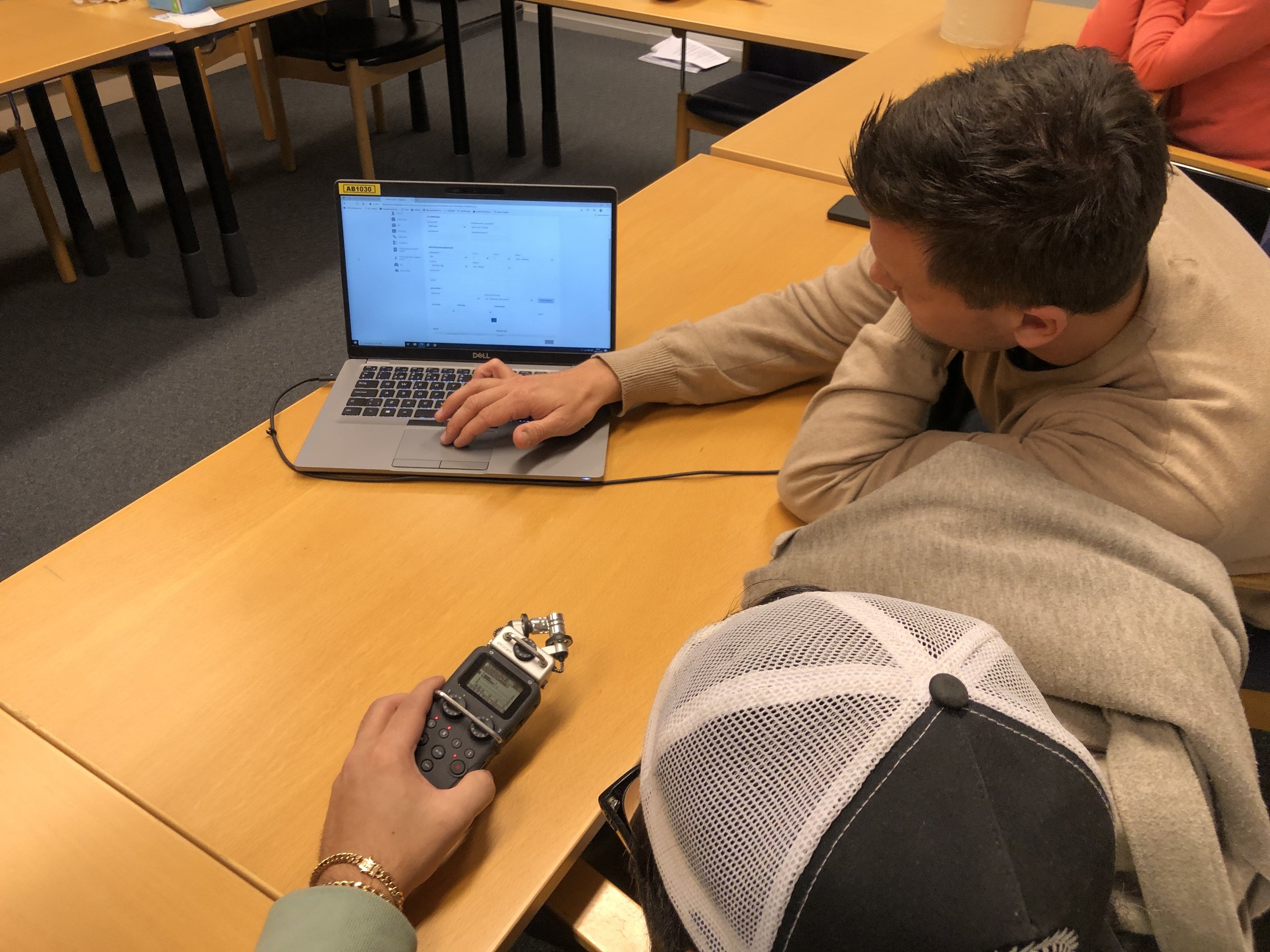
Interviews with nurses
Observation and service safari
Interviews
Through the interviews with nurses, it was discovered that physical pocket manuals, binders with documents, and digital solutions in the ambulance system were used for information support during pre-hospital care. However, the nurses also suggested that having these documents in a digital format would be beneficial, especially for updating medicines. They noted that there are different names for synonym preparations of drugs that work the same way, and this makes it difficult to remember them. To cope with this, the nurses write down the synonyms in their pocket manuals or on pieces of paper that are often misplaced.
The interviews with the nurses also revealed a challenge in the transmission of critical information within individual stations and throughout the organization. Standardizing the distribution of information and structuring it in a more coherent way was identified as a crucial need.
During the interviews with the board, it was revealed that they were already working on an application for information support, including treatment guidelines. This study served as a foundation for the design and development of the application.
The design team opted to conduct interviews with the ASH board and nurses to gain a better understanding of information distribution and availability from their perspective. Through the interviews with the nurses, it became apparent that...
Observation
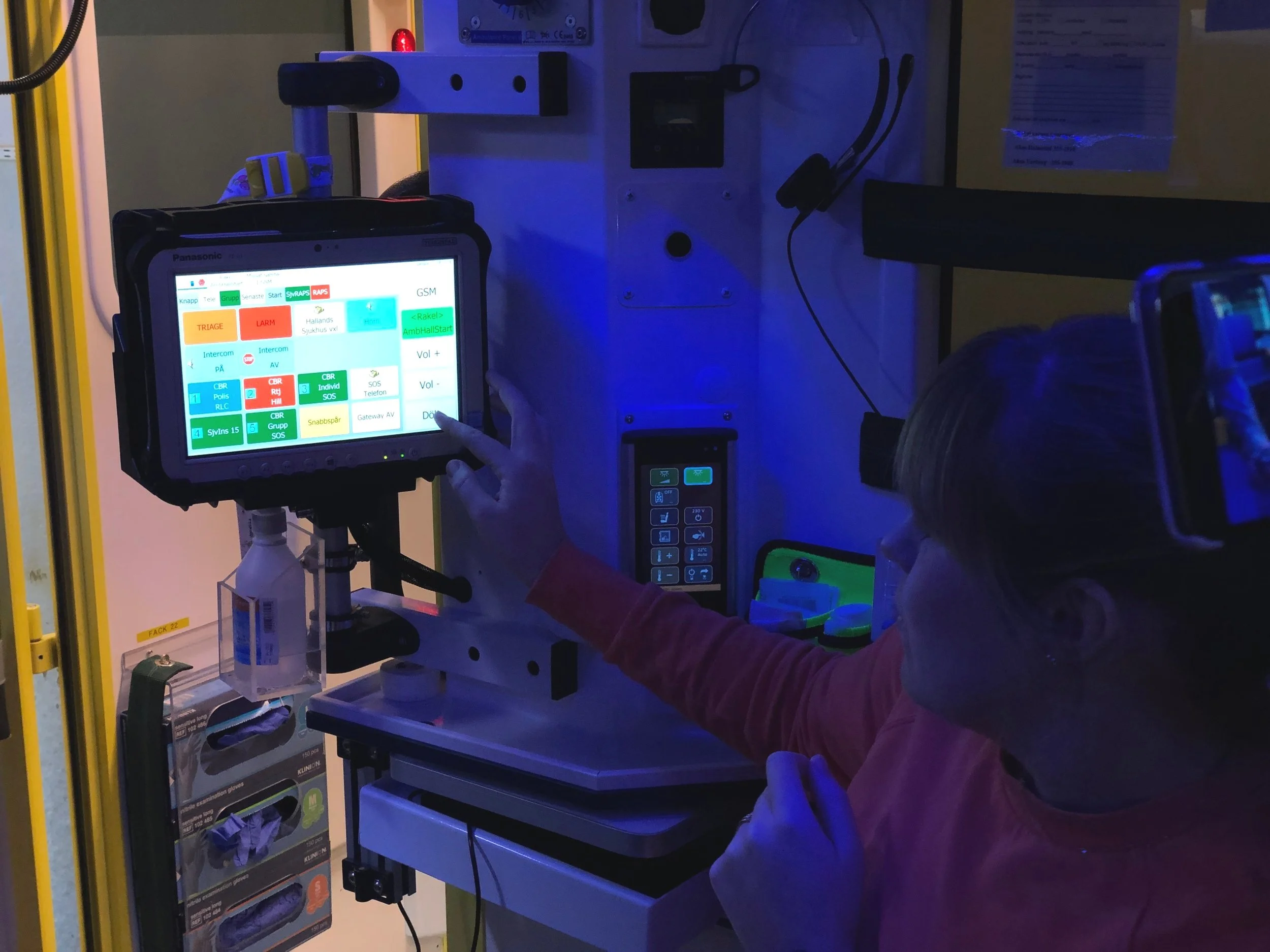
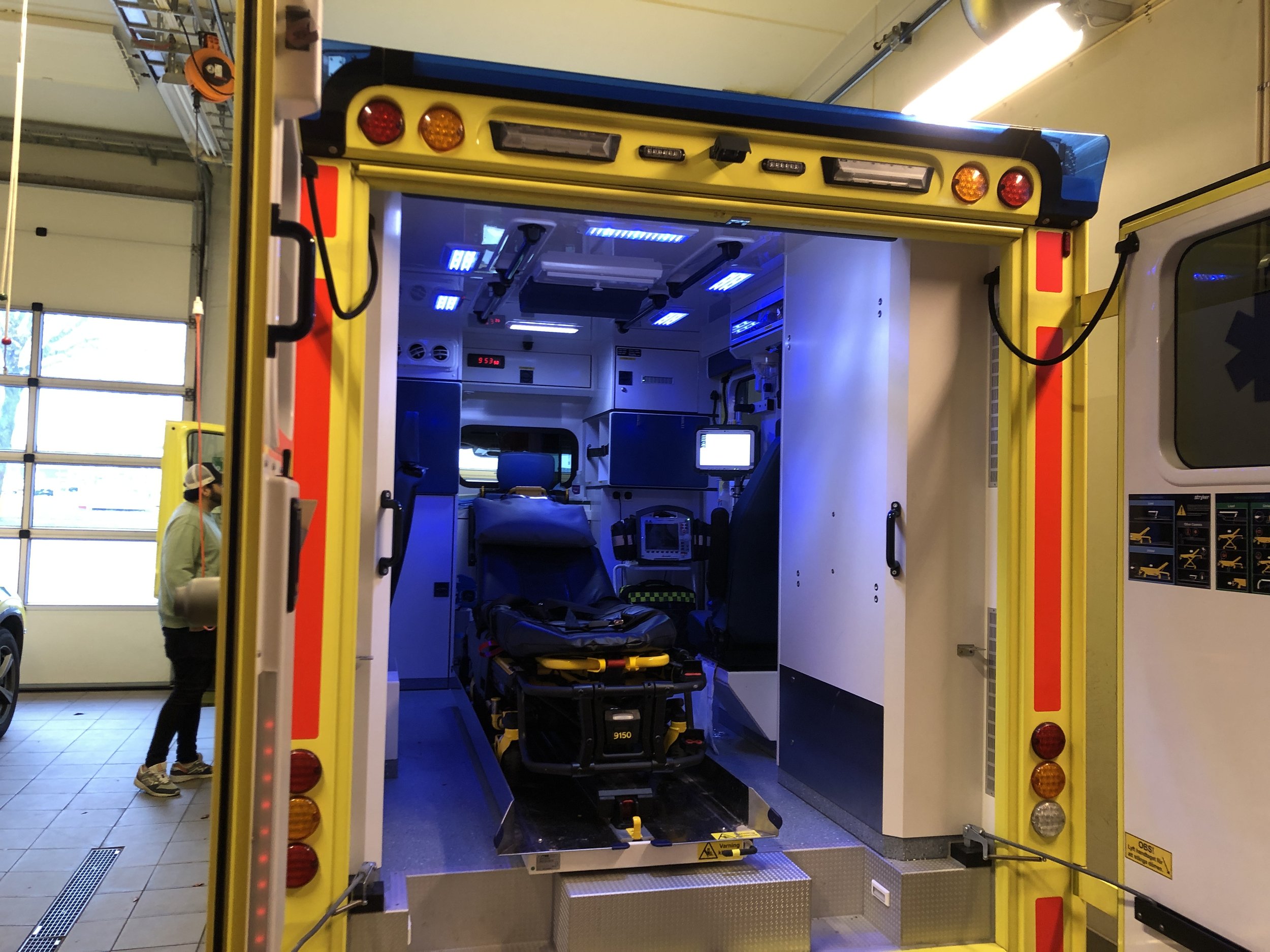
The purpose of conducting an observation was to gain a comprehensive understanding of how the organization operated. This approach allowed us to gain valuable insights into the systems in the ambulances and how they utilized treatment guidelines and decision support tools to assist nurses during their fieldwork. This provided us with an in-depth knowledge of the organization and its operations.
Define
The scope
The organization expressed a need for a solution to address the distribution of information, as well as the nurses' requirement for an application that provides treatment information support during fieldwork. However, given the extensive scope of the project, mapping the entire area posed a significant challenge. To address this, we decided to divide the area into two separate scopes for better management and focus.
During our research, we discovered that the organization had already acquired an application for information support of treatment in the fieldwork. However, there were concerns about the application's adequacy, based on the experiences of other regions. To investigate this further, we conducted a heuristic evaluation of the application, using empirical data from interviews with nurses about their information support needs during fieldwork. Our evaluation showed that the app met the nurses' requirements, but we were still curious about the negative opinions surrounding the application. To gain more insight, we contacted nurses from other regions who used the app and conducted additional interviews. Our findings showed that...
Due to the need for information while treating patients in the field, it was crucial for the application to work in areas with poor reception, which unfortunately was not the case.
The application exhibited minor variations depending on the region where it was utilized.
During the project, we brought up this issue to the individuals responsible for the application used by the clients. Since our focus was on the second scope of the project, which was the distribution of information, we directed our attention towards finding a solution for standardizing the distribution of information.
To further examine the nurses' views on the distribution of information at the individual stations and the organizations as a whole we used methods such as:
Survey - that was spread through mail concerning the weekly information for the station
Interviews - with nurses at the stations in Halland
The data showed that:
The distribution of information was different from each station and didn't work in the sense that there were different channels for distribution of information within each station and within the organization as a whole.
There was a need to structure and standardize the distribution of information and to make sure that everyone had access to the information.
Iterative design
When the design team had the required knowledge, we conducted iterative design, this part of the project contains the following:
Ideate
Prototyping
Evaluation
Ideate
Sketching
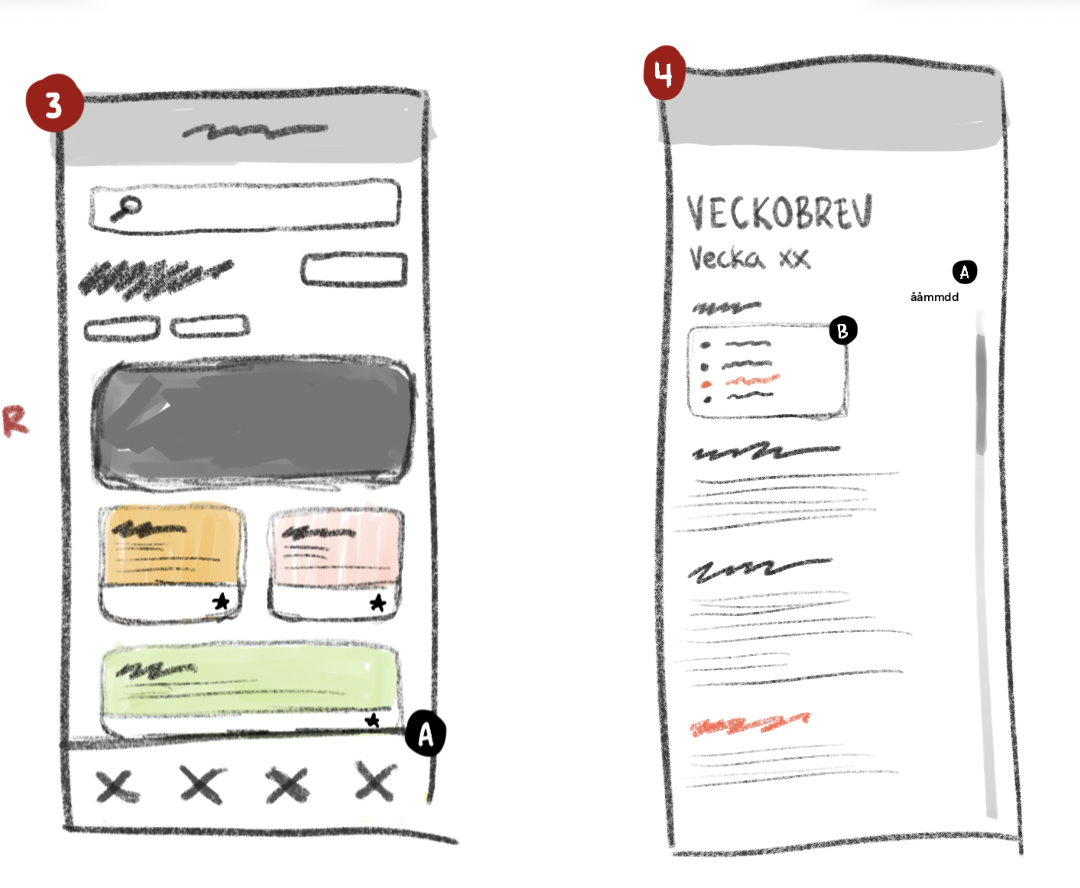
Initially, we began by brainstorming various functions that could potentially solve the identified problems and communicated these solutions through sketches. Following this, we created a checklist of interface requirements and possible prototyping challenges. The core functions that were deemed necessary to implement included:
a place for newsletters to be stored
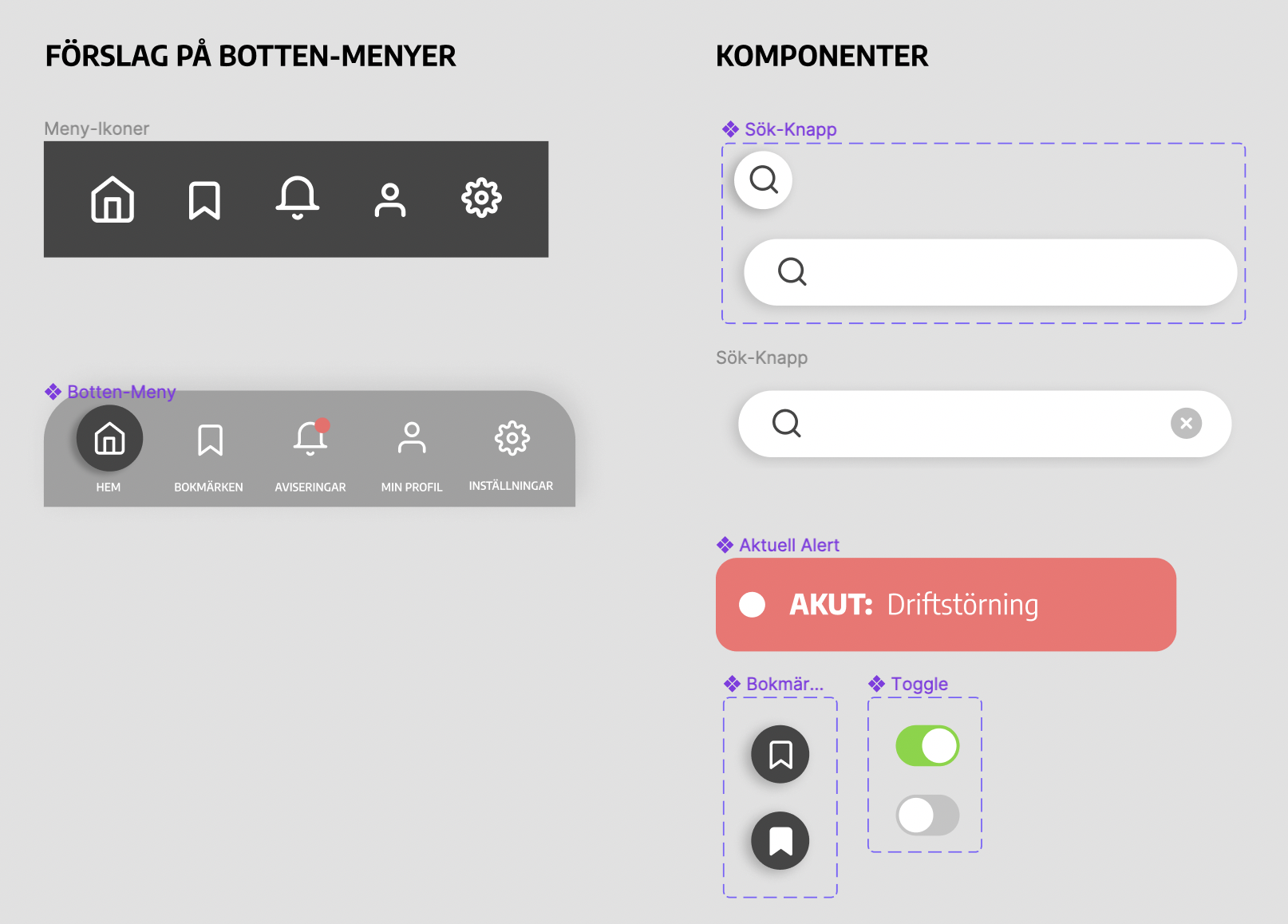
a clear menu
functions to clarify urgent and important news
Once we knew what to include in the sketches, we created joint sketches for the interface.
Prototyping
Low-fidelity prototype
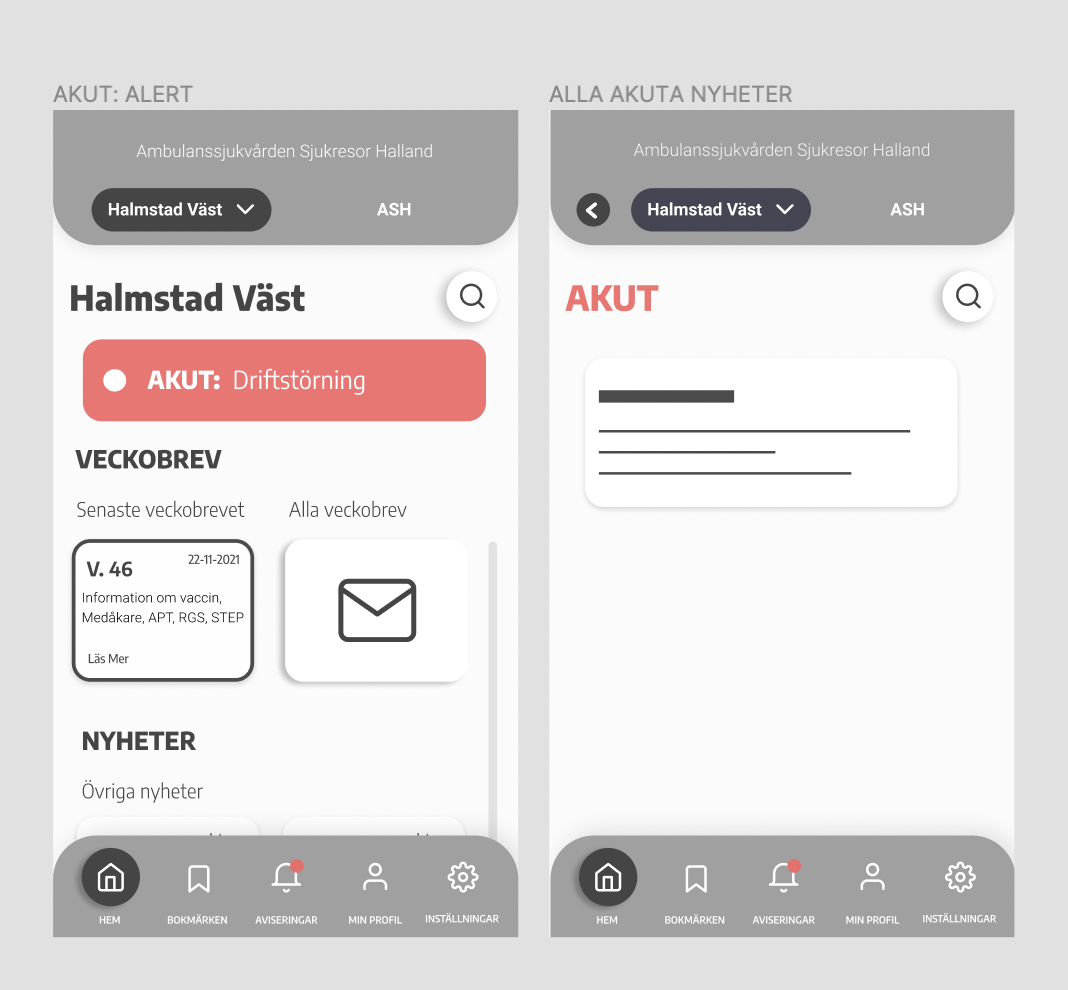
The team used Figma to create wireframes and developed an interactive lo-fi prototype. The wireframes were iterated and resulted in mixed-fidelity wireframes that were used to create a prototype for usability testing, with a focus on testing the information structure.
Evaluation
the need for an indication if a newsletter was read or not
the menu and the use of one hand was appreciated
the function for urgent news was clear and needed
The purpose of the evaluation was to assess the user experience of the application's structure and visual elements, particularly the menu, on the nurses' work phones. Usability testing was conducted with five nurses at their station. The evaluation revealed...
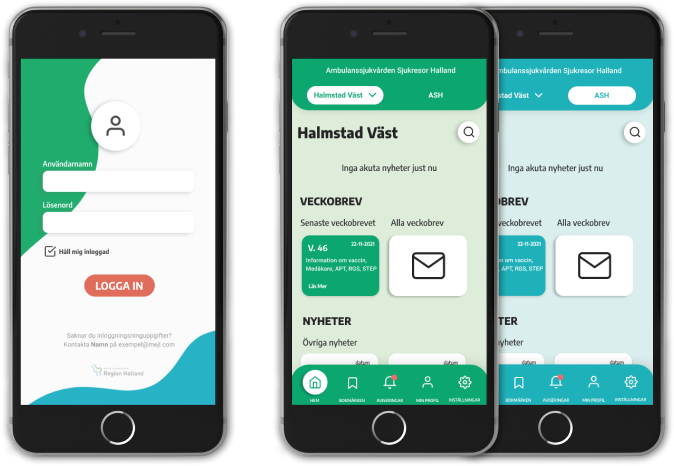
High-fidelity prototype
Conceptualization
The aim of this project was to create a foundation for the development of an application that integrates various information distribution and support channels, including treatment guidelines for nurses in the field.
However, due to project constraints, the design team, in agreement with the client, decided to focus on an application for information distribution. Through the project and research, we identified the need for an application that could meet the various needs of the client. However, it's crucial to emphasize that the application must also work effectively in the challenging and diverse environments of nurses' fieldwork.
Takeaways
Iteration
The iterative nature of the design process highlights how each phase can influence and build upon the others. It's crucial to reflect on and critically evaluate design decisions, remaining open to the possibility of iteration.
The description may not always accurately reflect the thing being described.
Through this project, we learned that the initial issue presented in the brief is not always the actual issue. By being willing to critically evaluate both the brief and the design process, and by taking a step back to look at the design situation holistically, we can often uncover underlying reasons behind the initially stated issue.